📘 Harami Pattern
By 42Fibonacci • Last Updated: 2025-12-15 • 7–9 min read
Part of the 42Fibonacci Candlestick Education Series
What Is a Harami Pattern?
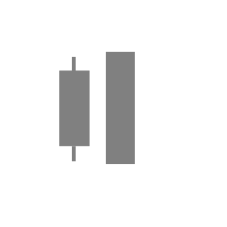
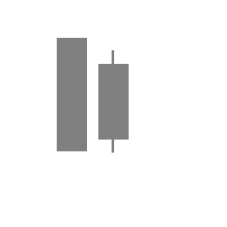
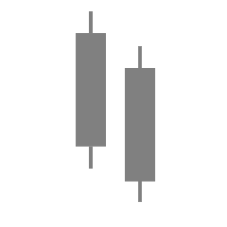
A Harami Pattern is a two-candle reversal formation that signals slowing momentum and emerging hesitation within an existing trend. It appears when a strong trend candle is followed by a much smaller candle fully contained within the prior candle’s real body.
A Harami Pattern consists of:
- A large-bodied first candle that reinforces the current trend
- A small-bodied second candle that trades entirely inside the first candle’s body
This “inside” structure reflects a loss of follow-through — the dominant side is still in control, but its momentum is no longer expanding.
Harami Patterns appear in two forms:
- Bullish Harami — forms after a downtrend and suggests selling pressure may be fading
- Bearish Harami — forms after an uptrend and suggests buying momentum may be weakening
Unlike the Engulfing Pattern, which shows an immediate takeover, the Harami represents an early warning, not a confirmed reversal.
Origin of the Pattern
The name “Harami” comes from the Japanese word for “pregnant.”
The imagery reflects the structure:
- The large first candle is the “mother”
- The smaller candle inside is the “child”
This symbolism captures the essence of the pattern — a powerful trend that is now carrying uncertainty within it.
The Psychology Behind the Harami Pattern
The Harami tells a story of momentum slowing rather than control flipping.
The first candle reflects confidence and dominance. Buyers in an uptrend or sellers in a downtrend still appear firmly in charge, extending the existing move with strength.
The second candle changes the tone.
Instead of expanding further, price activity contracts sharply. The smaller candle shows that the market can no longer sustain the same pressure. Participation fades. Conviction softens. The dominant side still holds control — but it is no longer pressing its advantage.
This contraction is the key psychological signal.
- After an uptrend, a Bearish Harami reflects buyers hesitating and becoming vulnerable to profit-taking.
- After a downtrend, a Bullish Harami shows sellers losing urgency while buyers begin to test the downside.
The Harami does not declare a reversal, it signals that the trend’s momentum is stalling, creating conditions where a reversal may develop if confirmation follows.
How to Trade the Harami Pattern (The Right Way)
Quick read: Use Harami only after a clear trend, prefer a very small inside candle at support/resistance, wait for a confirming bar/volume, and anchor risk to the first candle’s extremes.
The Harami Pattern is valuable not because it predicts reversals, but because it alerts traders to changing conditions. When used correctly, it helps traders shift from trend-following to risk-aware observation — waiting for confirmation rather than reacting emotionally.
Start With Trend Context
Harami Patterns only carry meaning after a clear, extended move.
- A Bullish Harami is relevant after sustained selling pressure
- A Bearish Harami matters after prolonged buying momentum
Without a well-defined trend, the pattern often reflects routine consolidation.
Focus on the Size of the Second Candle
The smaller the second candle, the stronger the message.
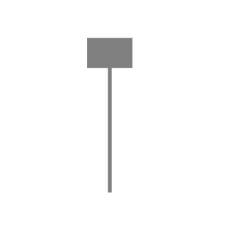
A very small body — especially one approaching a Doji — shows a sharp contraction in momentum. This reflects uncertainty, not balance, and increases the likelihood of a reversal attempt.
Use Location to Filter Quality
Harami Patterns gain significance when they appear near support or resistance.
A Bullish Harami near demand or prior lows is far more meaningful than one forming mid-range.
A Bearish Harami near resistance or prior highs carries more weight than one forming in open space.
Wait for Confirmation
Because the Harami does not include follow-through, confirmation is essential.
Traders often wait for:
- A strong candle closing in the expected reversal direction
- Momentum indicators (RSI, MACD) to align
- Volume behavior to confirm participation
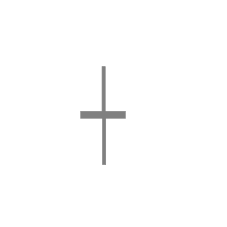
The Harami Cross — where the second candle is a Doji — strengthens the signal but still requires confirmation.
Define Risk Clearly
The first candle provides natural invalidation levels.
- In a Bullish Harami, a break below the first candle’s low weakens the setup
- In a Bearish Harami, a break above the first candle’s high invalidates the thesis
If price quickly resumes the original trend, the Harami has failed.
Case Study: Bullish Harami Cross After a Prolonged Downtrend
Quick read: After sliding from ~$115 into ~$107 support, $AEP printed a gap-up doji fully inside the prior red body; that pause in selling turned into a ~10-bar advance.
Timeline
- Late July: Peaks near ~$115.
- Early Aug – Mid Sep: Multi-week slide into ~$107 support.
- Mid Sep (signal day): Gap-up doji sits fully inside prior red body → Bullish Harami Cross.
- Following sessions: Buyers sustain a ~10-candle advance.
The Signal
- After a strong red candle, price gapped up and formed a doji entirely inside the prior body — classic Harami Cross and a clear pause in bearish follow-through.
Context
- Extended multi-week downtrend from ~$115 to ~$107.
- Pattern printed right at the defined support area near ~$107.
- Momentum was slowing; RSI near oversold; MACD turning up.
What Happened
- Bears couldn’t reassert; buyers stepped in and AEP climbed for roughly 10 sessions, confirming the handoff.
TIP
Quick checklist: real prior trend, tiny inside candle (doji ideal), forms at support/resistance, midpoint respected, and at least one follow-through bar.
Common Mistakes Traders Make With Harami Patterns
Quick read: Don’t treat Harami as a confirmed reversal, insist on a tiny inside candle, use trend/location filters, wait for confirmation, and use the first candle’s extremes as invalidation.
The Harami Pattern is often misunderstood because it looks simple on the chart. Most mistakes occur when traders treat it like a stronger reversal pattern instead of what it truly represents: early hesitation within an existing trend.
Treating the Harami as a Confirmed Reversal
A Harami does not signal that control has flipped — it signals that momentum has stalled. Entering aggressively without confirmation often leads to premature trades that get stopped out when the original trend resumes.
Harami Patterns are best used to prepare for a possible reversal, not to assume one.
Ignoring the Relative Size of the Two Candles
The relationship between the first and second candles is critical.
If the second candle is not meaningfully smaller than the first, the pattern loses its psychological message. A true Harami reflects a sharp contraction in participation, not just a mild pause. Marginal size differences often represent ordinary consolidation rather than a shift in conviction.
Expecting Immediate Follow-Through
Because the Harami is an early signal, it may take several candles before a reversal develops — or it may fail entirely.
Many traders abandon sound setups too quickly or chase price prematurely. Patience and confirmation are essential when trading Harami Patterns.
Trading Against a Strong, Accelerating Trend
Harami Patterns work best when momentum is already slowing.
When a trend is expanding with strong volume and large candles, a single Harami often reflects a temporary pause rather than meaningful exhaustion. Fighting strong momentum with a subtle pattern usually leads to failure.
Overlooking Location and Structure
A Harami forming near support or resistance carries far more meaning than one forming mid-range.
Ignoring structure often causes traders to overvalue patterns that lack a clear reason to reverse. Location gives the Harami its relevance.
Confusing Harami With Engulfing Patterns
Harami and Engulfing Patterns are opposites in structure and intent.
- Engulfing Patterns show decisive control shifts
- Harami Patterns show hesitation and contraction
Treating a Harami with the same confidence as an Engulfing Pattern leads to mismanaged risk and unrealistic expectations.
Failing to Define Invalidation
Because Harami signals are subtle, traders sometimes hesitate to exit when the setup fails.
If price breaks beyond the range of the first candle and resumes the original trend, the Harami has lost its meaning. Without a clear invalidation plan, small misreads can turn into large losses.
Summary: The Harami Signals Hesitation, Not Control
The Harami Pattern is an early warning signal, highlighting when a trend begins to lose momentum and conviction. Unlike aggressive reversal patterns, it reflects contraction and uncertainty, not dominance.
When it appears after an extended trend and near meaningful levels, the Harami can prepare traders for an upcoming shift — provided confirmation follows.
Explore Harami setups using our tools:
When momentum stalls, pay attention — and let confirmation guide the trade.